Remove the guesswork, train on evidence.
The most advanced data analytics in fitness.
Every session you plan is scored before you train it — sets per muscle, minutes per energy system, the recovery cost of each day against your own capacity — so you see what the week will do before you commit to it. Set the race, and you’re told when the plan drifts from it.
Active duty, aspiring military or first responder?
TPF Operator scores lifts, runs and rucks on one recovery budget and tracks you against the standard you’re training for — P Company, RASP, the PST, the AFT and more.
Two apps, three disciplines, zero idea what the week adds up to.
- The lifting lives in one app, the running in another — and nothing connects them.
- Never sure whether you’re recovered enough for the key sessions.
- A race date in the diary, and no way to tell whether the training is moving you toward it.
You did the hard part. The effort shouldn’t disappear into a black box.
A real week, scored before it’s trained.
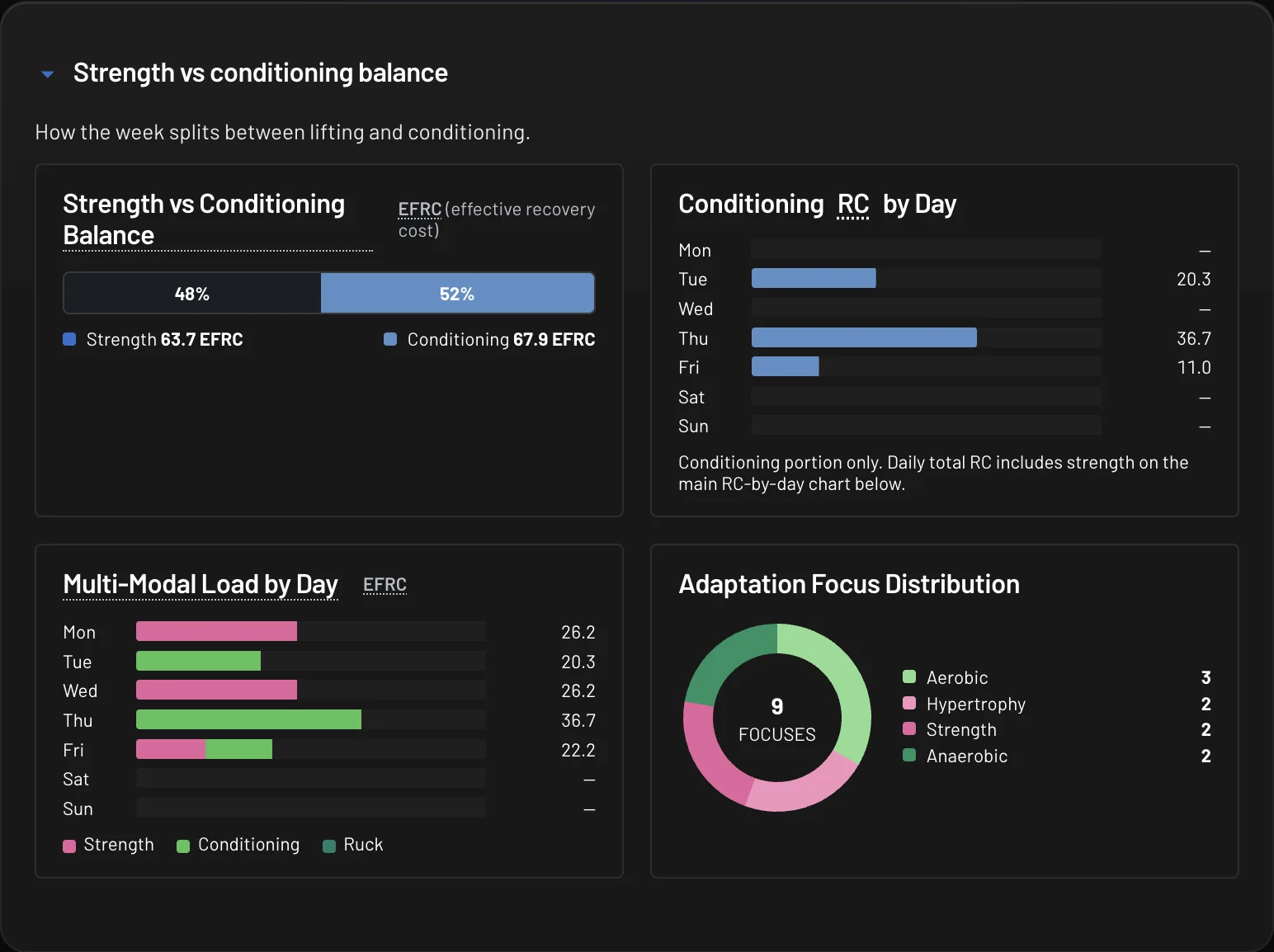
This is the Hybrid Athlete Builder — the free week, exactly as the app scores it. Two lifting days, two running days, one mixed day. Red is strength. Blue is conditioning. The charts are what the engine says the week will do.
- MonHeavy lower
Back squat 5×3–5 · RDL · hip thrust · calves
- TueLong slow run
60 min · Zone 2
- WedHeavy upper
Bench 5×3–5 · row · press · pull-ups
- ThuRun intervals
6 × 800 m at VO₂max pace · 1:1 work:rest
- FriMixed-modal
KB swings · chin-ups · 15 min row / ski / bike
- See the whole week, scored
Three steps. No surprises.
- 1
Set the race, build both engines
Name the goal — Hyrox, the comp, a number — then build lifts, runs, metcons and stations in one plan, each session costed before you commit.
- 2
Check the mix
Energy systems, muscle volume, recovery spend. If one engine starts costing the other — or the plan drifts from the goal — you’re told before you train it.
- 3
Train it and track to the race
Log as you go and watch progress land against the goal you set — with both engines visible all the way to race day.
Three ways to get a programme. One engine scoring all of them.
Let the AI draft the week, build it yourself in the Builder, or link a coach who programmes for you. Whichever you choose, every load, pace and progression comes from the same engine, and the week is scored against your recovery budget before you train it.
Let the AI draft it
Answer a short questionnaire — experience, goal, days, the places you train and the minutes you have on each — and the AI picks the split, the sessions and the exercises. When the day changes — a different gym, forty minutes instead of ninety — say so and the session is rebuilt for the kit and the time you actually have.
Build it yourself
Start from a blank week or one of 80+ templates and shape it in the Builder. The analytics score every exercise as you add it — sets per muscle, minutes per energy system, the cost of each day — so you see what the week will do before you commit to it.
Link your coach
Your coach builds and adjusts the programme from their own account and it lands in yours. They see what you log and what the analytics say about it; you train from the same plan on your phone. The AI draft lands in the same Builder, so a coach can start from it rather than from nothing. How coaching works →
What you can see that you couldn’t before.
Real screens from the app. Each one answers a question you used to answer by feel.
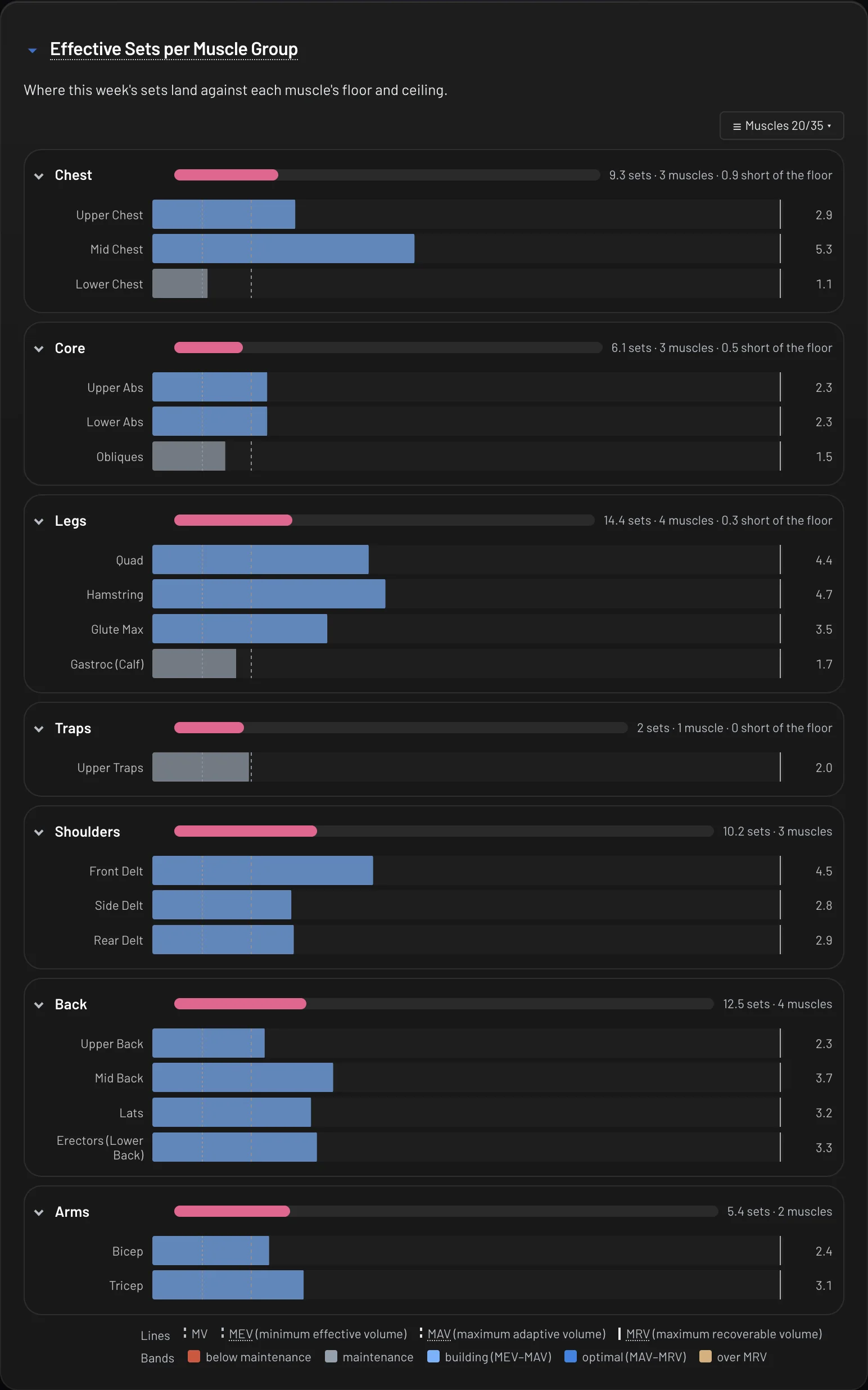
Enough for every muscle, too much for none
Every working set weighted and summed per muscle, against your own thresholds. The lifting doesn’t quietly thin out while the mileage builds.
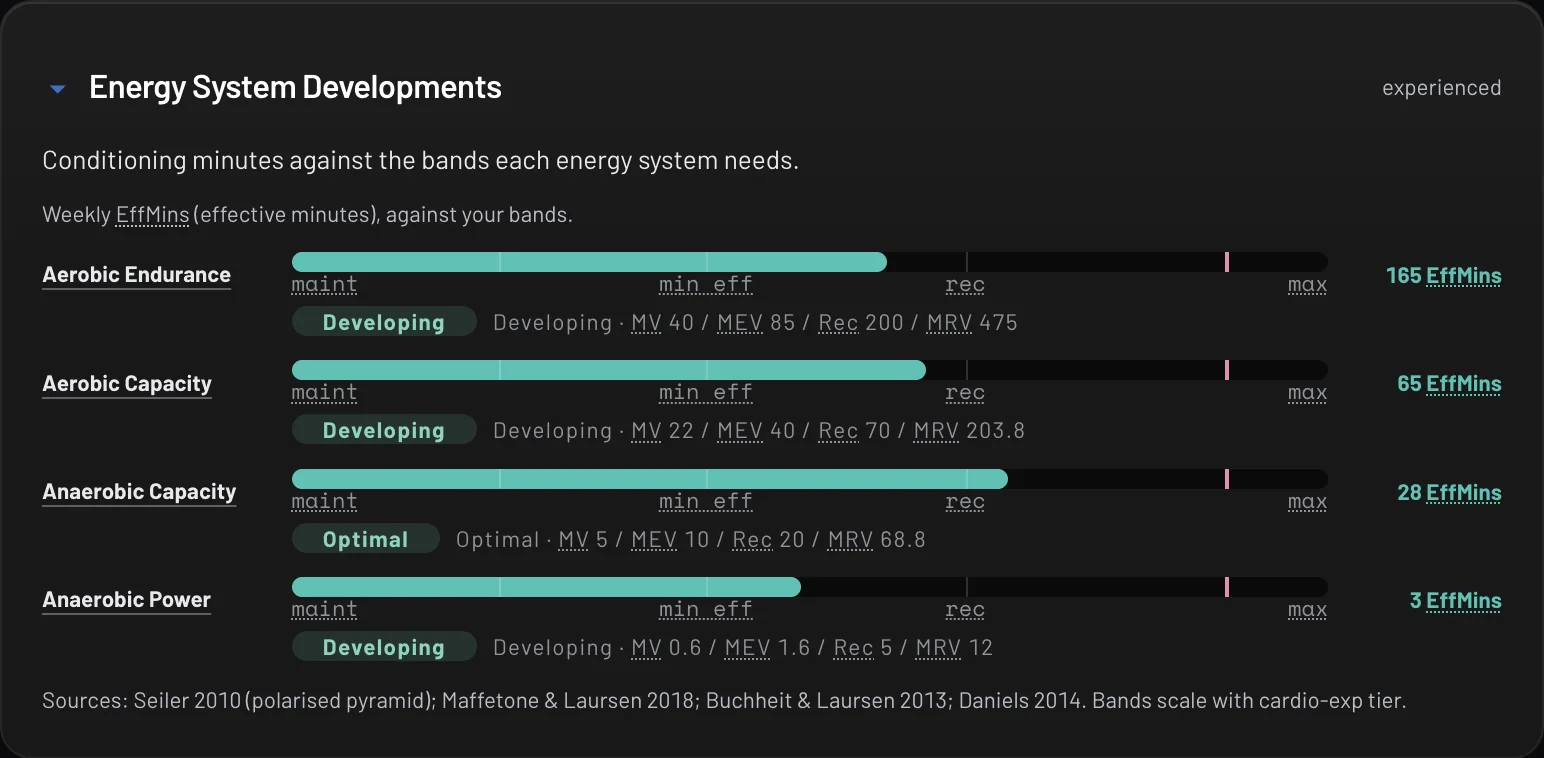
Which engine the week is actually training
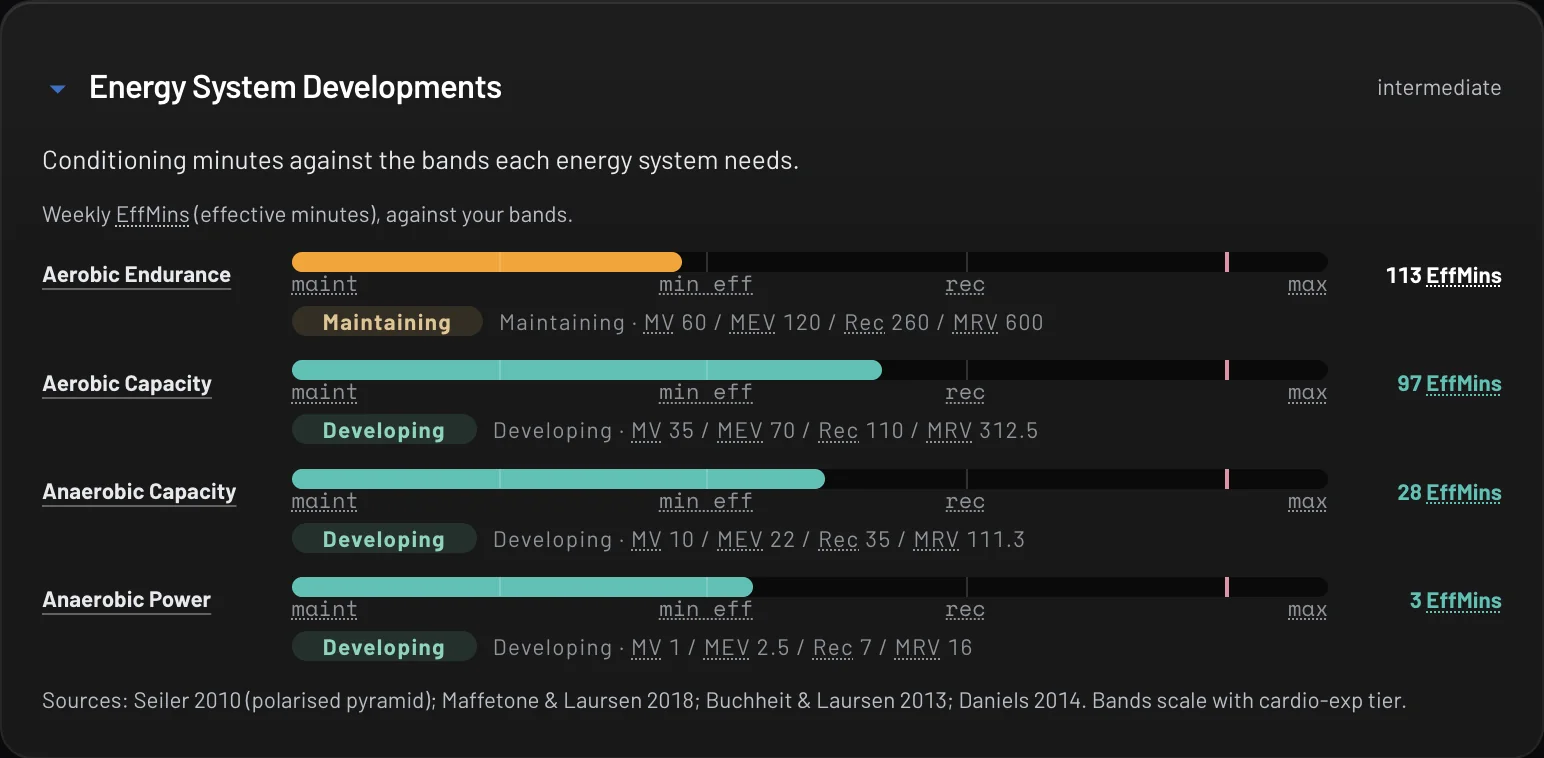
Effective minutes per energy system against the published bands — so a week that feels hard can’t hide a system it never touched.
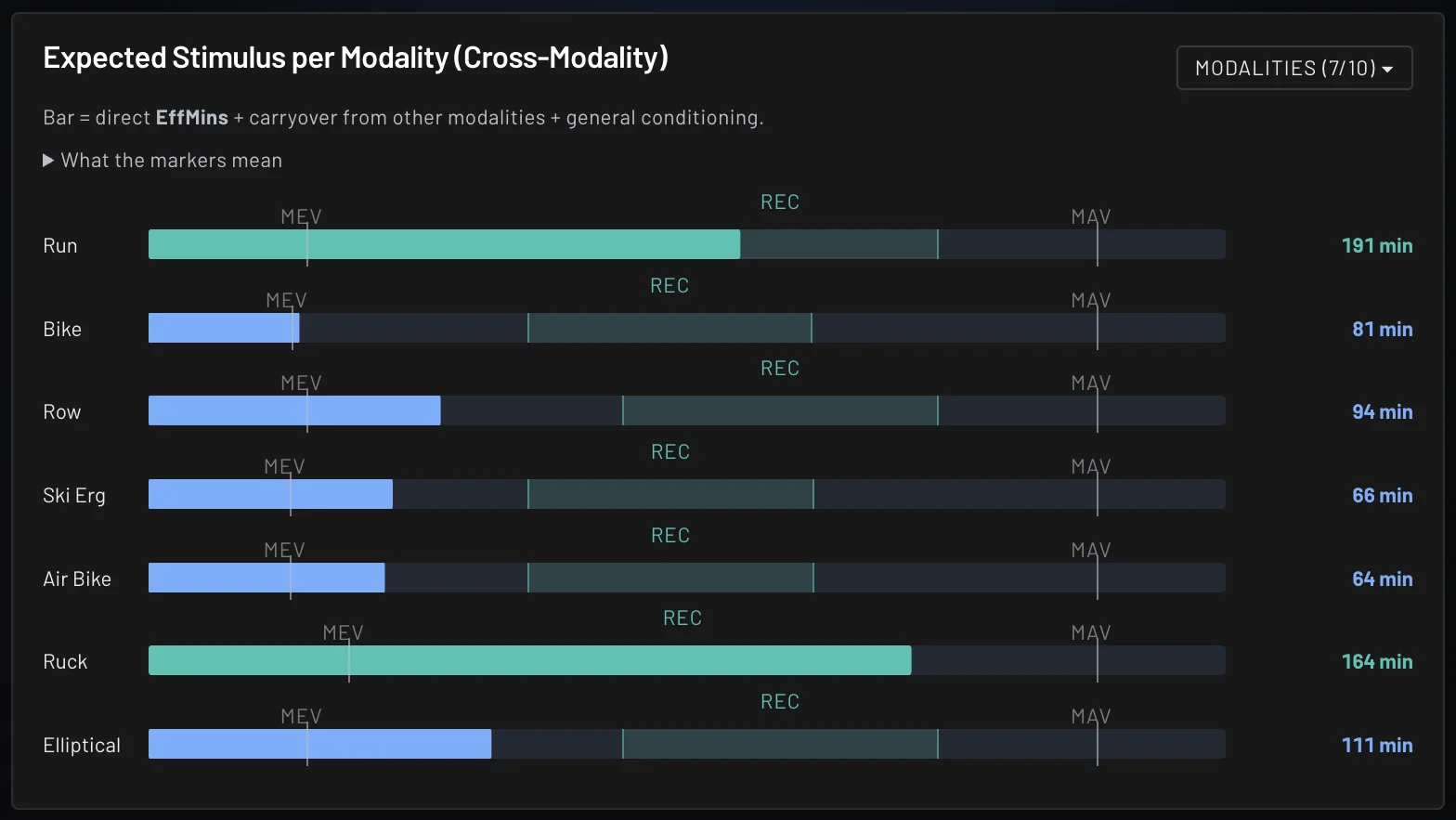
What the run does for the bike
Direct minutes plus the carryover between modalities, per modality. A rowing session counts for what it actually trains.
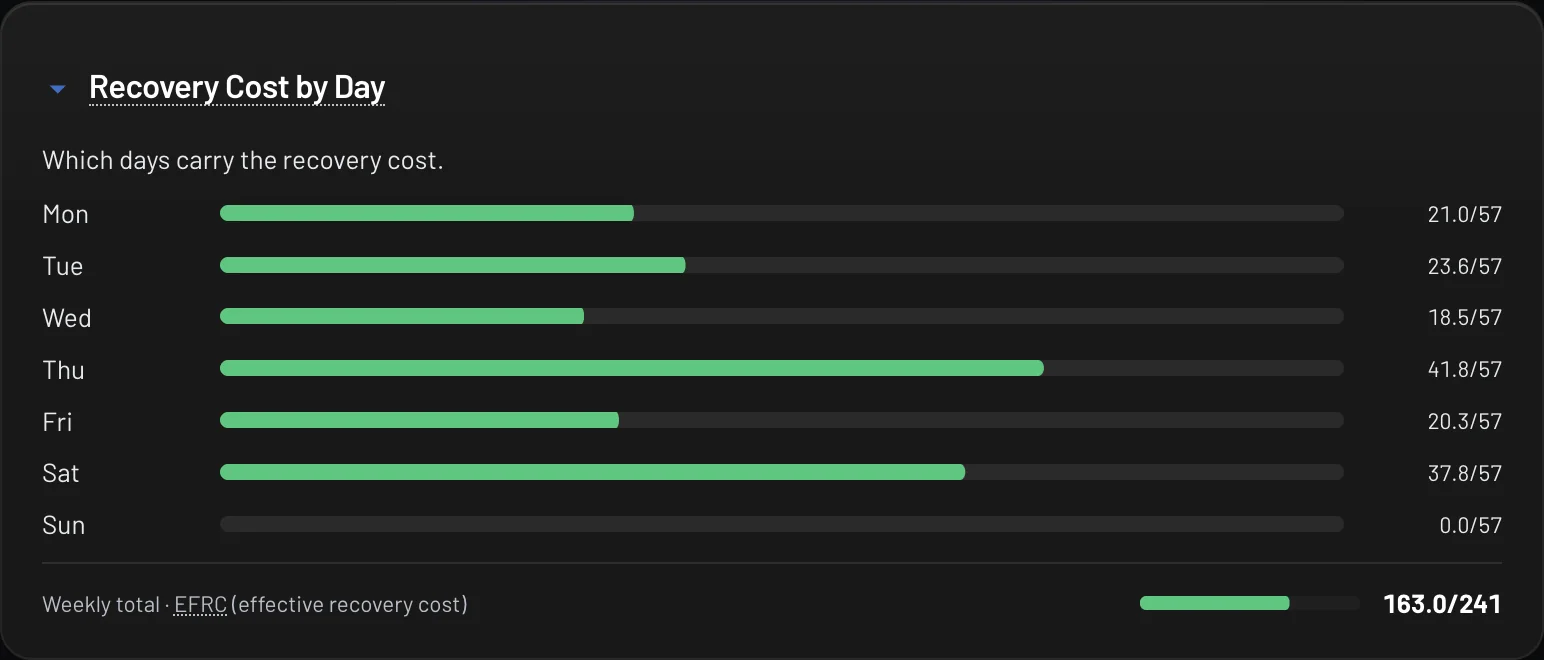
What Monday costs Thursday
Each day’s recovery spend against one budget, and the week’s total against your capacity — before any of it is trained.
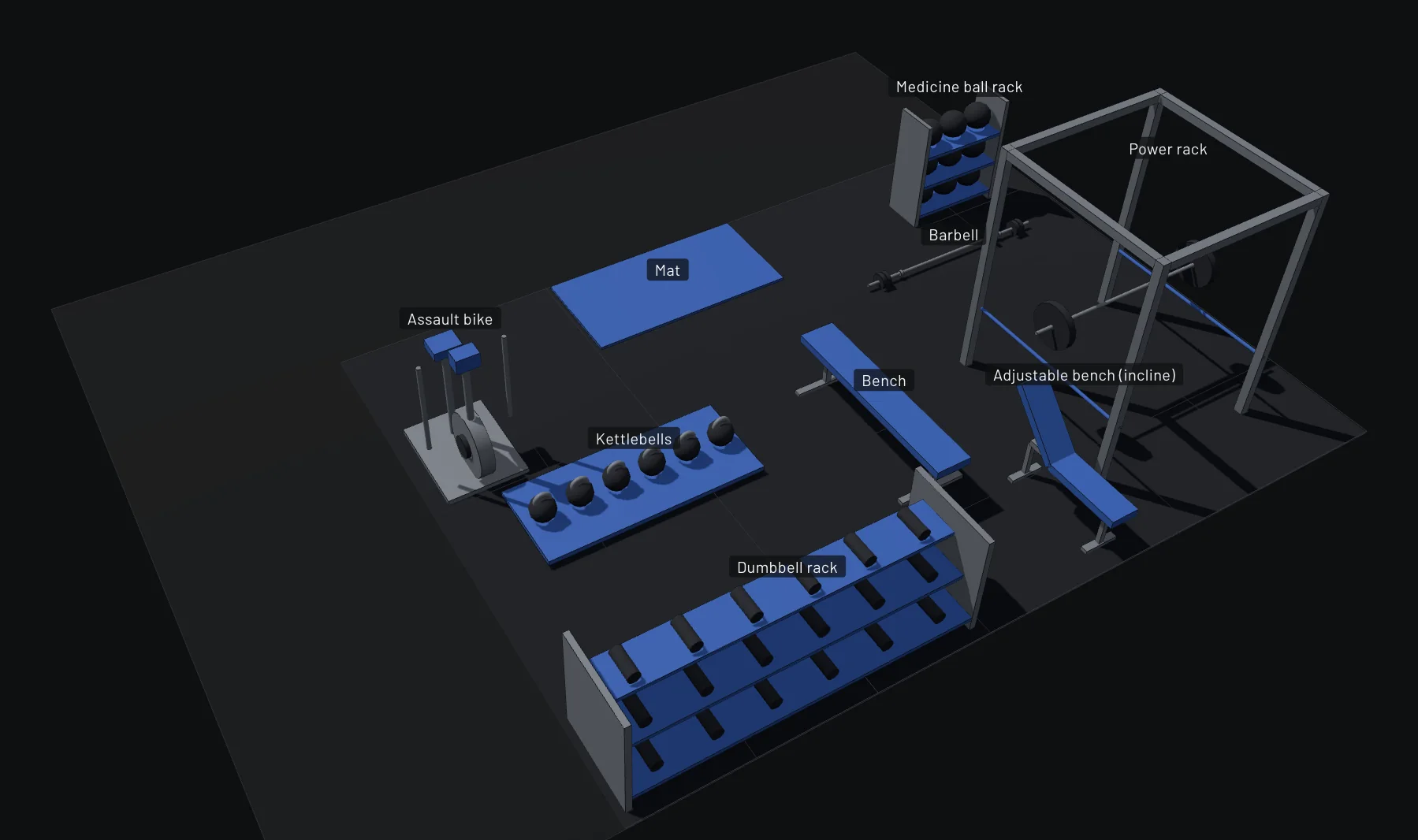
Build the places you train.
A gym, a garage, a field, a hotel, a barracks. Record each one with the kit it has and the limit on it — the heaviest dumbbell, the bar and plates — and lay the floor out as a plan you can turn in 3D. Templates and Quick Set Up never hand you a programme that needs kit you don’t have.
We’ve trained across every discipline, splitting recovery between the barbell and the erg. We built TPF because no tool showed us what the whole week was actually costing.
British Army PTIs
Built by the people who programme physical training for soldiers — on tired bodies, in the field, to a deadline.
Peer-reviewed
Every weighting and curve traces back to published research — Wilson, Schumann, Banister, Buchheit & Laursen and more.
Web now, apps soon
Runs in any browser today, with one login and one training history on every device you sign in on. Native iPhone and Android apps are in build.
Most apps make you choose.
TPF doesn’t.
One engine for lifting, running and metcons — not a lifting app and a running app that never talk to each other.
| A single-discipline app | TPF Hybrid | |
|---|---|---|
| Tracks lifting | ||
| Scores conditioning by energy system | ||
| Metcons scored, not just timed | ||
| Same engine for strength + conditioning | ||
| Concurrent-training interference modelled | ||
| Cross-day fatigue carry-over | ||
| AI alerts when the plan drifts from your goal | ||
| Cites every coefficient |
One product, whichever screen you have on you.
Plan both engines on a big screen where the balance is obvious, then run the session from your phone at the track or in the gym.
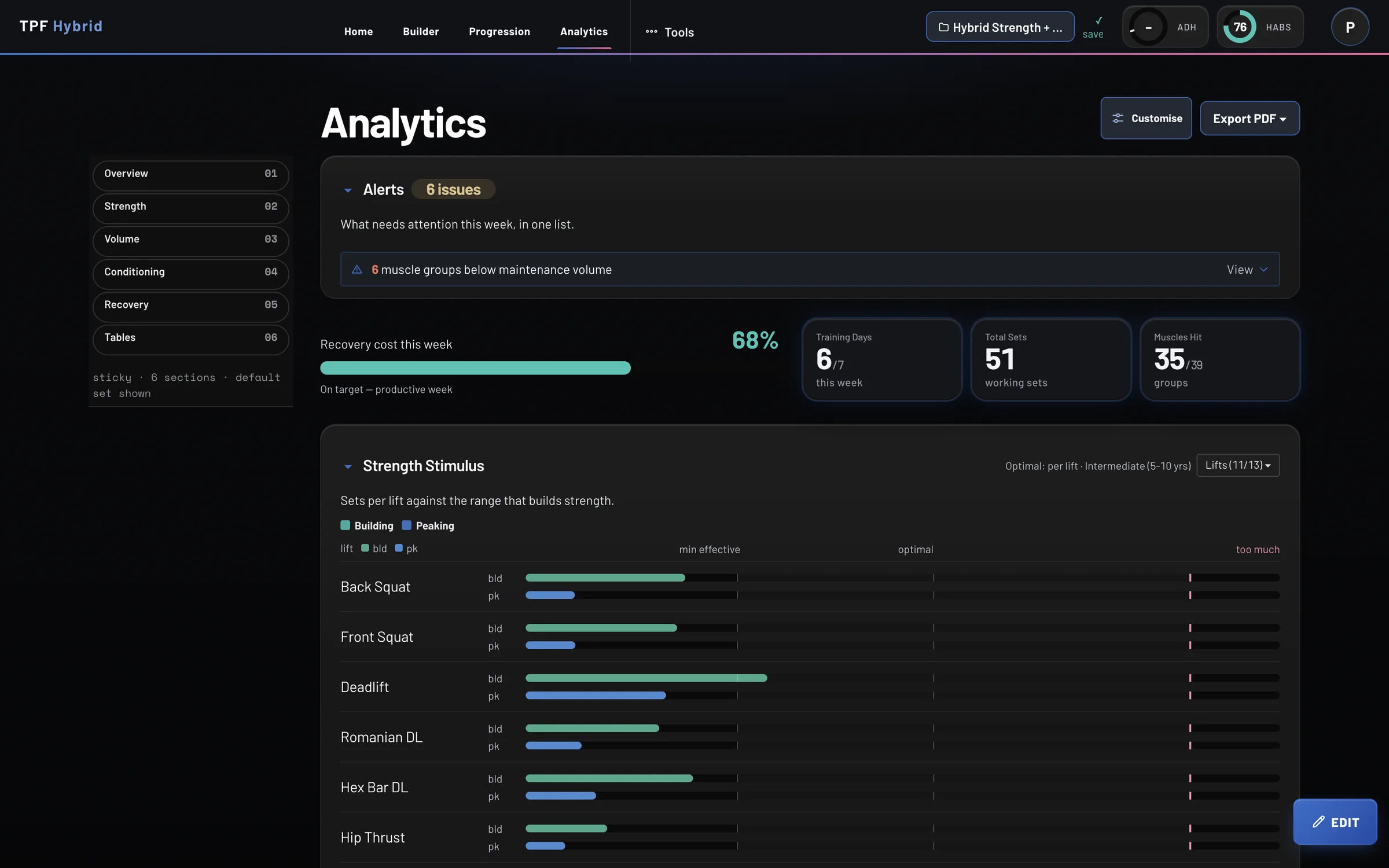
The full product in any browser. Nothing to install, nothing to update, and one history that follows the login rather than the device.
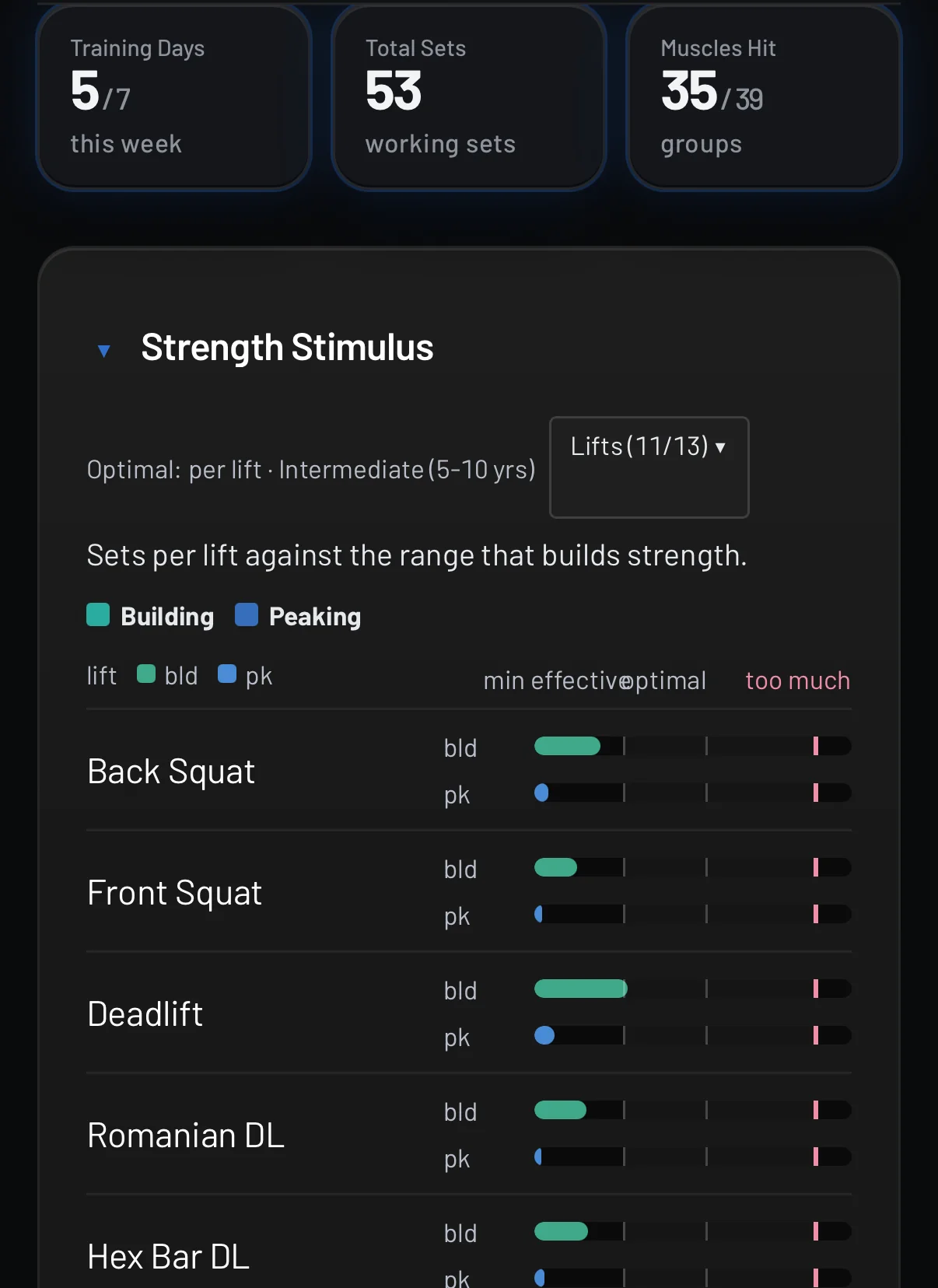
The same screens in a phone browser, laid out for a handset. The iPhone and Android apps are still in build — you don’t need them to train off your phone today.
Become the athlete who is strong and fit — on purpose.
Both engines progressing, neither at the other’s expense, and progress you can check against the race you set. Show up on race day knowing the mix was right. Be your own expert.
Get the appNot ready? Start smaller. Take a free week of training, no email, no card — and see exactly what it scores.
Get a free training week